For a very long time, the Dominican Republic was considered a monocultural country whose economy was based on the cultivation and export of tobacco, fruits, coffee, and cocoa. Over the past twenty years, a significant shift away from this model and diversification of the economic structure can be observed. The main economic sectors are: construction, tourism, free trade zone operations, and mining. Currently, agriculture generates only 7% of GDP. This is a country that is constantly developing and will continue to develop, as indicated by recent data. As reported by the elDinero portal, the Dominican Republic is heading in the right direction. Central Bank forecasts indicate real GDP growth for 2021 of 5.5% compared to the previous year.
Recently, an increase in exports and imports between Poland and the Dominican Republic can be observed. According to GUS data, the Dominican Republic is the 109th recipient of our exports, with a 0.01% share, and the 92nd supplier of Polish imports with a 0.02% share. According to Dominican data, Poland is the 44th supplier of imports with a 0.1% share and the 25th recipient of this country’s exports with a 0.3% share. This level is definitely too low for the potential of both countries. Worth noting is the contract of the Polish Security Printing Works for printing the Dominican peso.

Poland exports to the Dominican Republic primarily carbon electrodes, dairy products, other food products, machine parts, cranes, furniture, knitwear, tobacco industry machinery, chemical products, cosmetics, and tires, while it imports medical products, surgical threads, dressing materials, tobacco (including popular cigars), cocoa, footwear, bananas and plantains, alcohols (mainly rum), electrical switches, cables, gardening and agricultural equipment.
Unmentioned but worth emphasizing here is the renewable energy sector, which the Dominican Republic has been focusing on in recent years. Thanks to its favorable climate, this country has ideal conditions for the development of this sector. At this moment, 11% of the country’s energy comes from renewable energy sources. The largest wind farms are located on the Pedernales Peninsula, including the “Los Cocos” wind farm and a farm in Monte Cristi province, where “El Guanillo” is located. The total generated capacity of these farms is 150MW. One of the recently created projects near the capital is the “Girasol” solar farm, which can generate up to 120 MW. The Dominican Republic has set itself the challenge of having 30% of energy come from renewable sources by 2030.

Real estate is the most frequently chosen investment among Poles. This is primarily due to attractive prices in the primary market as well as the secondary market. The Dominican government has also created favorable conditions for buyers. One of them is the CONFOTUR law, which exempts the buyer from the PPC tax (3%) and property tax (1%) for 15 years when purchasing in the primary market. In the case of purchasing property above $200,000, you will also receive residency. This market is very dynamic. Over the past 10 years, approximately $9 billion has been invested in the real estate sector.
One of the important economic sectors is trade. It is worth emphasizing here that the Dominican Republic has much to offer North America as well as European countries. One of the key products that the Dominican Republic produces is cigars. Thanks to a favorable market, including free trade zones, the Dominican Republic is the largest cigar producer in the world! Total exports in 2020, according to data from the ProDominicana Investment and Export Center, exceeded one billion dollars! We must not forget about such products as:
- Avocado – in 2017, the Dominican Republic was the world’s second-largest avocado producer.
- Banana – banana production growth from 2014 to 2018 was 6.75%.
- Cocoa – 58.7% of cocoa trade goes to Europe (the Netherlands, Belgium, Italy, and Spain).
- Mango – the total area of mango plantations in 2017 was 6,668 hectares, generating over 21 tons of fruit.
Free trade zones are another area to which we should devote a moment of attention. There are 75 free trade zones operating in the country, in which 695 companies operate, collectively creating 175,555 jobs. 50% of these regions focus on the production of medical and pharmaceutical products, tobacco products, and clothing.

- The Dominican Republic is one of the main suppliers of blood transfusion devices, blood pressure measurement devices, needles, and medical catheters. In 2019, exports of medical and pharmaceutical products amounted to $1.659 billion. The attributes of this sector are a highly qualified workforce with competitive rates, strategic location, and preferential access to the United States or European markets.
- The Dominican Republic is a country with great potential for tobacco cultivation. Within the free trade zones, this sector includes 88 companies, creating 32,327 jobs throughout the country. Cigars are exported to many places around the world, with the greatest popularity gained in the United States, occupying 51.3% of this market. Other main recipients of Dominican cigars are Switzerland, the Netherlands, Germany, Spain, and Canada.
- The clothing industry is a pioneer in free trade zones. It is the third important pillar of the economy, in which 103 companies operate. Exports of clothing and textile products accounted for 16.7% of total exports in 2019, reaching $1.048 billion.
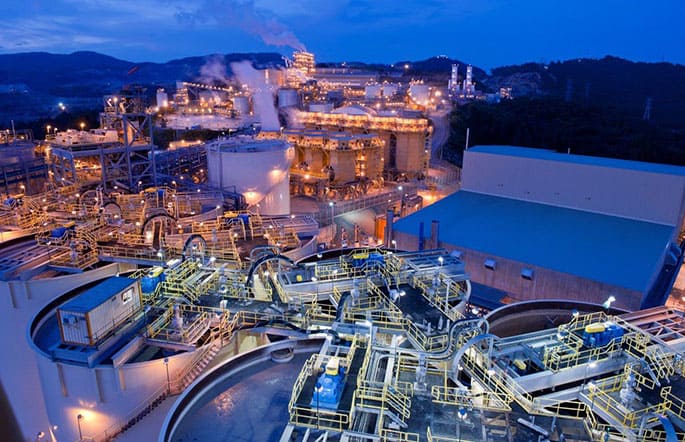
The mining sector is one of the main sources of income for the Dominican Republic. Currently, the country has the second-largest gold deposits in the Americas and produces a range of mineral resources such as: gold, silver, bauxite, ferronickel, and industrial materials: kaolin, feldspars, silica sands, and others. The endemic larimar stone is also mined here, whose deposits are not yet known. Official statistics indicate that from 2010 to 2020, the mining sector received investments totaling over $4 billion, which represents 15% of all foreign investments.
Cinematography is the last of the sectors that is becoming increasingly popular. It attracts more and more foreign companies. Due to its lush nature and the well-preserved old town in Santo Domingo, directors decide to take advantage of these opportunities. Among others, films such as “The Godfather II,” “Apocalypse Now,” and “Jurassic Park” were filmed in the Dominican Republic. Recently, the music video for Enrique Iglesias’s new song “Me Pase” was also created here, and scenes were filmed for Jennifer Lopez’s film “Shotgun Wedding” and “Lost City of D,” starring Brad Pitt and Sandra Bullock.
The Dominican Republic is a country that has created attractive conditions for investors. Thanks to this, its economy is one of the fastest-growing in that region. Without a doubt, the sectors mentioned above are not the only ones worth paying attention to. The Dominican Republic remains a country where many services do not yet exist. Courier services and insurance are among the services that need improvement in the Dominican Republic.
This is precisely why the Polish-Dominican Chamber of Commerce is organizing an economic mission to the Dominican Republic, in which it will attempt to present the Dominican market to Polish entrepreneurs. More information can be found at the link: https://fb.me/e/ZPdAnka4. As founding members of the Polish-Dominican Chamber of Commerce, we cordially invite you to this unique event.
Jędrzej Pacak