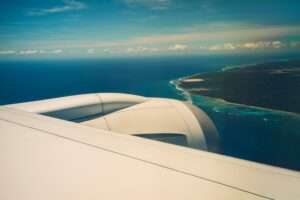
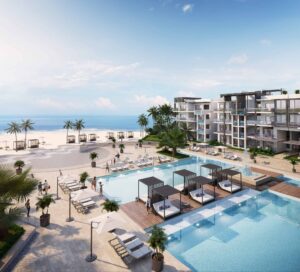
1. BAVARO, PUNTA CANA
Punta Cana: The Safest Investment Destination in the Caribbean. For over a dozen years, global real estate investors, particularly from affluent European countries, the USA, and Canada, have chosen the Dominican Republic. It is the number one vacation investment destination. The Dominican economy is growing the fastest among all countries in the region, which has led to significant development of its infrastructure, not just for tourism.
PUNTA CANA BECAUSE… it is undeniably the most popular tourist destination in the Dominican Republic. The Dominican Republic is the undisputed queen of Caribbean tourism, and Punta Cana stands out among the aforementioned cities. Over 60% of all tourists visiting the country come to Punta Cana for their holidays. That’s over 6,500,000 sun-hungry people annually. Not long ago, Mastercard’s Global City Destination Index recognized Punta Cana as the best city for entertainment and relaxation. It ranked higher than regional powerhouses like Orlando, Florida, and the very popular Cancun, Mexico. All of this means that investors can expect relatively high returns with comparatively low outlays.
PUNTA CANA BECAUSE… tourism to Punta Cana is experiencing continuous expansion.
One of the biggest indicators of tourism development in a given region is the growth of direct international flights. In reality, this provides a clear picture of the actual tourist demand for a particular location. Major airlines simply see where tourists want to fly and are adding more and more direct international routes specifically to Punta Cana. This is particularly evident with American and Canadian airlines, while European tourism giants are not far behind. Polish airlines do not yet fly directly to the Dominican Republic. However, the number of charters and the offerings of domestic travel agencies are growing. This gives hope for the launch of regular connections between one of Poland’s cities and Punta Cana.
Specifically, Punta Cana International Airport (PUJ) is the best-connected airport in the Caribbean and Central America. It handles flights from 26 countries and up to two million passengers annually. Since 2017, the area has also been a cruise ship destination, thanks to the magnificent Marina Cap Cana, which now also welcomes small luxury cruise ships. By land, the Oscar de la Renta highway, also known as Autopista del Coral, provides visitors with convenient access to the beaches of Bayahibe and many other attractions in less than an hour. In just two and a half hours, one can reach the capital, Santo Domingo, and its historic “Zona Colonial.”
2. BAYAHIBE, LA ROMANA
Located on the Caribbean Sea, this is a place for those who appreciate peace and quiet. According to tourists, it offers the most beautiful sunsets in the entire Dominican Republic.
Less than an hour from Punta Cana airport, the town of Bayahibe is a beautiful, postcard-perfect place on the shores of the Caribbean Sea. La Romana/Bayahibe is one of the country’s most popular vacation spots. Sugarcane fields lead to long white sandy beaches from Dominicus to Bayahíbe. The cave-filled forests in Cotubanamá National Park are a source of fresh water and Taino rock art. Offshore, the islands of Saona, Catalina, and Catalinita are surrounded by turtle nesting areas. These are also frequent destinations for divers and snorkelers, thanks to the coral reefs found here. Numerous shipwrecks also lie underwater.
BAYAHIBE, LA ROMANA BECAUSE… This area is home to the largest sugarcane factory in the Americas. It was once headquartered in La Romana until its owners diversified their operations and became interested in tourism. In 1974, they opened the luxurious Casa de Campo Resort, a favorite and well-known celebrity destination. This is primarily due to the feeling of intimacy during holidays, but also for the award-winning golf courses designed by architect Pete Dye. The adjacent 16th-century Altos de Chavón is a stunning replica of a Mediterranean village perched above the Chavón River. Right next door is even an open-air Greek amphitheater, where Grammy Award-winning artists perform annually.
It is also the only place in the world where the magnificent Bayahíbe rose grows – a soft, pink cactus shrub, and interestingly, it appears on Dominican currency.
In addition to Punta Cana International Airport, tourists arrive here via airports in La Romana (LRM) and the cruise port on the Salao River in La Romana.
3. PUERTO PLATA, SOSUA, CABARETE
The birthplace of tourism in the Dominican Republic, Puerto Plata seems to be experiencing a renaissance. Its spectacular, expansive landscape combines sea, mountains, lush valleys, rivers, and numerous beaches. Cacao and coffee trees grow on its fertile soil, and beneath lies the world’s purest amber.
PUERTO PLATA BECAUSE… The natural wealth of Puerto Plata continues to amaze those who gaze upon La Novia del Atlántico, or, as locals call it, “The Bride of the Atlantic.” The bird’s-eye view from the cable car – the only one in the Caribbean, taking passengers up Mount Isabel de Torres and its lush botanical gardens – reveals only a part of this Atlantic coast with over 100 kilometers of beaches. These surround many coastal villages, rivers, waterfalls, and all-inclusive hotels, as well as boutique properties of various sizes. Moreover, Puerto Plata is home to colonial remnants. It preserves the largest collections of 19th-century Victorian-style houses in the Caribbean. The Amber Museum houses the world’s oldest fossils. Along the coast, one can admire one of the first fortresses from the region’s colonial period – Fortaleza San Felipe, dating back to 1577.
East and west along the Puerto Plata coast, constant trade winds blow. The river systems, the extensive Cordillera Septentrional mountain range, and the Atlantic Ocean combine to create a world of magnificent fresh Caribbean air, including beloved beach meccas known for water sports like Kite Surfing and Windsurfing. Less than half an hour from the city is Sosúa. This town has an incredible history – it was first settled by Jewish immigrants who fled Nazi Germany. It is full of beautiful beaches and some truly good diving spots.
Nearby Cabarete is a world-renowned center for windsurfing, surfing, and kiteboarding, and a favorite cosmopolitan hideaway for “young retirees.” There is also the long “golden” Playa Dorada, along with coastal attractions near the city, from canyoning at the 27 waterfalls of Charcos of Damajagua to snorkeling in Cayo Arena and a full day of relaxation at Ocean World Marina.
The main airport near Puerto Plata is Gregorio Luperón International Airport (POP). It is located 15 minutes from the city center and the Playa Dorada or Costa Dorada hotels, as well as the Amber Cove cruise center in Maimón.
4. SAMANA PENINSULA
This is definitely one of the most beautiful regions in the Dominican Republic. It is here that thousands of whales come to the warm waters of Samaná Bay to breed. Undoubtedly, some of the most beautiful and difficult-to-access beaches in the entire Dominican Republic are found here. Inland, the incredible vegetation captivates, amidst which one can stumble upon waterfalls and lakes. Here you will find beautiful villas and apartment buildings on hills and amidst the jungle with stunning views of the bay. They are often hidden among the winding roads of the peninsula’s numerous elevations.
The peninsula stretches from the northeastern coast of the Dominican Republic and juts into the ocean. The natural paradise that is the Samaná Peninsula is as coveted today as it was in the 16th century. Pirates hid in its lush, palm-filled forests, secluded beaches, and caves. At that time, European and Haitian forces vied for control of this region in the waters of the Atlantic Ocean and the Caribbean.
Today, Samaná is well-connected by land and air, yet it remains a secluded, paradisiacal escape from more touristy places like Punta Cana or closer Puerto Plata. Its mountains and valleys create crystalline rivers that flow into the Atlantic as they cascade towards magnificent white sand beaches, stretching for hundreds of kilometers around the peninsula’s rocky coast. It is also here that approximately 2,500 humpback whales “visit” Samaná Bay annually. The giant mammals return each year to this special corner of the Dominican Republic to mate, give birth, and bask in this magnificent tropical setting.
In addition to seasonal whale-watching boat trips in picturesque Samaná Bay, more ecotourism adventures are a stone’s throw away: bodyboarding and kitesurfing in Las Terrenas; trekking, birdwatching, or caving in Los Haitises National Park; canyoning or horseback riding to El Limón waterfall; and boat trips to magnificent white sand beaches at the foot of 90-meter (300-foot) cliffs or to the offshore island of Cayo Levantado.
SAMANA BECAUSE… it is more a traveler’s dream than a typical tourist’s. Thousands of Europeans arrived as tourists and became residents, establishing businesses that give the area a unique, cosmopolitan vibe. In Las Terrenas, French cafes and charming guesthouses give way to elegant boutiques, bistros, and beachfront hotels. But the peninsula retains its diverse cultural heritage. Beyond French croissants, you’ll find cuisine rich in coconut flavors and seafood – an influence of early Canary Islander settlers and descendants of 18th-century African American immigrants who still live here. In Las Galeras, fishing village life remains unchanged despite the crowds of tourists who gather here to reach the famous Playa Rincón and Playa Fronton.
Wherever you decide to stay on the peninsula, whether in treehouses in El Valle, tucked away in an eco-lodge in Las Galeras, or situated in a beachfront apartment on the magnificent golden sands of Cosón: prepare for a wonderful time, the wildest of all these more touristy places on the island.
El Catey International Airport (AZS) is the gateway to the Samaná Peninsula. Cruise ships dock in Samaná during the winter season, near Cayo Levantado and Samaná Bay. Sailing enthusiasts will find full docking facilities at Puerto Bahía marina, on the northern end of Samaná Bay. By land, modern highways connect the peninsula to major points, including the Santo Domingo-Samaná highway or Route 7, and the Boulevard Turístico del Atlántico towards Las Terrenas. The roads offer breathtaking, winding views of the Cosón Bay coastline.
If you wish to see what attracts investors in the Dominican Republic, I warmly invite you to investment trips. The next one is already in June. Write to me or call +48 502 754 263; Andrzej Włodarski.
More information in the trips tab or simply follow the link below https://casa-dominicana.com/wyjazdinwestycyjny/: