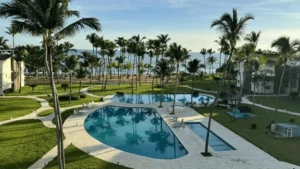
Year after year, the real estate market sector in the Dominican Republic is developing literally before our eyes. New projects are emerging, and attractive locations for further investments are becoming increasingly scarce. However, the market abhors a vacuum – new developments will appear in place of old complexes or previously undeveloped areas. This process will continue, because changes in Latin American markets occur more slowly than in Poland, but are more consistent and long-term. The question is increasingly being asked: is the Dominican real estate market not already approaching saturation, and does purchasing property in the Dominican Republic still make sense? To answer this, one must first understand the fundamentals – that is, why people are interested in this country at all and what drives demand. We will examine these motivations, and then move on to price forecasts and purchasing trends for 2026.
Why do people buy real estate in the Dominican Republic at all?
There are several reasons, and most of them become very quickly apparent to those who begin to analyze this market seriously. The first is property prices. Compared to other exotic destinations, the Dominican Republic remains competitive. An apartment of approximately 70 m² priced at around 605,000 PLN is an offer that is difficult not to consider attractive, especially compared to the Caribbean or popular Mediterranean markets.
The second important factor is operating outside the European Union zone. There is no automatic exchange of official information between European countries and the Dominican Republic. For many investors, this means greater freedom in accounting for rental income and the ability to accumulate funds without excessive bureaucracy.
Another argument is property value appreciation. In the primary market, increases of around 10% are often mentioned, and in the case of projects located on the first beachfront line, even around 20%. In practice, purchasing a property for $150,000 during the construction phase and selling it after project completion for over $200,000 is a quite probable scenario.
The climate is also significant. The Dominican Republic is a country of eternal summer – temperatures hover around 30°C throughout the year, and the water in the Caribbean Sea and Atlantic Ocean is approximately 28°C. Interestingly, the best weather in the Caribbean falls during the European autumn and winter, making it the ideal time to escape from the gloom and cold prevailing in Europe.
The last, but very important element is rental return. Depending on location and property standard, the average rate of return is approximately 7-8% annually. For many investors, this is a solid complement to the appreciation of the asset itself.
It is also worth emphasizing something that not everyone is aware of: purchasing property in the Dominican Republic means full ownership. The investor is entered into the local land registry, the Registro de Títulos, acquiring land rights and inheritance rights.
Does it still make sense to buy in the Dominican Republic real estate market?
The short answer is: definitely yes, although it must be honestly said that the best time was 6-7 years ago. Back then, properties on the first beachfront line could be purchased for less than 800,000 PLN, and apartments within a 10-minute walk from the beach for around 340,000 PLN. Those prices are gone and are unlikely to return. This does not change the fact that the market still offers attractive opportunities – simply at a different entry level.
Today, one must accept that properties that realistically make investment sense start from approximately $130,000. This is the threshold from which one can speak of a sensible location, standard, and rental potential.
The second factor is growing tourist traffic. More and more tourists come to the Dominican Republic year after year, and this directly translates into demand for rental apartments. This is precisely why the Dominican government is increasingly focusing on developing new tourist centers, rather than concentrating everything around Punta Cana. If you are interested in a broader market analysis, I refer you to the general 2025 summary.
From an investor’s perspective, it is also very important that the market is becoming structured. New investments require specific permits that are actually verified by state institutions, especially at the provincial level. This includes assessing the number of hotel rooms in a given region and analyzing whether problems with overcrowding, road infrastructure, availability of shops, restaurants, or even beach space will arise in the future.
It can be observed that the boom in new investments has slowed down somewhat. This is due to the large number of projects already under construction and the fact that some permits have been suspended or rejected. This is paradoxically very good news for those who have already purchased property, because lower supply in the future favors value appreciation.
Another important difference compared to many other countries. In the Dominican Republic, there are no additional restrictions related to property rental. As an owner, you can freely rent your apartment without the need to obtain special official approvals or licenses. For investors focused on flexible short-term rentals, this is one of the main arguments in favor of this market.
Is it worth investing on the east coast?
In our opinion, yes – it is still the best investment region in the country. The east coast is consistently promoted by the state and private sector, including through investment preferences resulting from the CONFOTUR tax relief system, which reduces project entry costs.
This is where the largest stream of tourists arrives – the airport in Punta Cana handles the most arrivals in all of the Dominican Republic. Tourist infrastructure is concentrated around it, and the region offers the richest package of attractions. Just look at the statistics: Saona Island is visited by every fourth tourist arriving in the country.
This region has maintained its “TOP” position for years for several specific reasons:
- First, the airport in Punta Cana belongs to private investors who actually drove the development of the east coast. A symbolic figure is Frank Rainieri – considered an icon of Dominican tourism, repeatedly decorated by the highest state authorities for his contribution to the country’s development.
- Second, the most exclusive communities and resorts are located right here: Casa de Campo, Punta Cana Resort, and Cap Cana. If people from the highest segment – celebrities and global investors – place a significant portion of their wealth here, it is a strong signal for “ordinary” investors as well.
- Third, Miches is developing dynamically east of Bávaro – a new tourist destination located close to the airport in Punta Cana. This is a region with great growth potential, in which Rainieri has also invested capital, opening a hotel there and owning extensive investment land.
- Fourth, nowhere else in the Dominican Republic is there such a wide tourist offer. It is on the east coast that the most offices operate offering excursions throughout the island – from Saona, through whale watching, trekking to the Limón waterfall in Samaná, to expeditions to Pico Duarte.
- Fifth, it is still the most popular region among Americans and Canadians, who constitute the majority of tourists in the country. Such strongly established market habits do not change quickly – it takes many years to shift the main stream of tourist traffic elsewhere.
All of this makes the east coast the most predictable and safest investment direction in the Dominican Republic, especially from the perspective of 2026 and subsequent years.
What property prices should be expected in the Dominican Republic in 2026?
The current price trend confirms what we have been observing for several years. The latest projects on the Caribbean Sea that have appeared on the market literally in recent days are priced on average approximately 10% higher than investments starting a year earlier. Each subsequent project enters the market with a slightly higher starting price. Of course, developers still compete with each other, but the space for real reductions is becoming smaller.
It is essential to understand how price marketing works. Slogans like “studio from $98,600” are meant to attract attention, but in the entire project there are usually two or three such units. The vast majority of apartments start rather from the level of $105,000 – $110,000, and these prices should be treated as a realistic reference point.
Very important from an investor’s perspective is that prices increase with sales progress. Depending on the developer’s policy, increases occur quarterly or after selling a certain portion of the project, for example 25%. This means that the same apartment can become more expensive by even approximately 10% between the beginning and end of sales for a given investment.
When planning a purchase in 2026, one must also be aware of one thing: foreign investors from Europe constitute a small percentage of buyers. Demand for real estate in the Dominican Republic is driven mainly by Americans and Canadians. This means that in many situations the negotiating advantage lies with the developer, who can simply wait for the next client. This particularly applies to cases where the buyer sets conditions deviating from market standards or tries to significantly reduce the price. Sellers often have no pressure to accept such proposals – they know that another interested party will appear, ready to buy on the prevailing terms.
This does not mean, of course, that one should not negotiate. However, one must find the golden mean and accept the market realities that apply in the Dominican Republic.
What will sell best in 2026?
There is no single answer to this question, because everything starts with a basic assumption: what the property is intended for. A purchase for pure rental looks different than an investment for personal use and steady value appreciation.
If the goal is rental, in 2026 it is worth focusing exclusively on Bávaro and the surrounding areas, and rejecting Bayahibe. Although many Poles purchased investment properties there 2-3 years ago, the market situation has changed significantly. The region on the Caribbean Sea has become too saturated with rental apartments for the scale of the town itself.
Infrastructure – restaurants, shops, pharmacies – will manage. The problem is something that cannot be expanded, namely the beach. Its limited capacity is already beginning to affect the tourist experience, which directly translates into reviews, guest returns, and long-term occupancy. And it is precisely the returning customer that is today the recipe for stable rental.
Yes, both in Bayahibe and Dominicus changes are planned – relocation of excursion boats, beach reconstruction, creation of beach clubs. However, this will not solve the problem of weekends, when beaches are overcrowded with local residents. If the property does not have private beach access, this will be a real limitation for an investor focused on rental.
For those who do not plan intensive rental, but rather steady value appreciation and longer personal stays, the Caribbean region may still make sense. However, for so-called hybrid properties that are supposed to work for themselves, in 2026 Bávaro and nearby locations remain the safer choice.
As for apartment layout, the market is very clear. Properties with one or two bedrooms rent best – this is today’s guarantee of high occupancy. Apartments with three bedrooms have even 20% lower occupancy, which at current prices significantly affects profitability.
Increasingly, clients are purchasing properties “for themselves” – for stays of several months, away from the tourist hustle and bustle. One such place is Cocotal. Prices are rising there year after year, mainly because plots for new development are running out.
The second location that is clearly gaining momentum is Cap Cana. Already today, growing activity can be seen around the marina, restaurants, and premium services. It is precisely such places that are the first to react with price increases. In our opinion, the next 2-3 years are the best time to purchase in Cap Cana, before prices enter the next level.
It is also worth looking more broadly: Uvero Alto or the areas around the Iberostar community also have potential, although there are few offers there and they often do not reach the Internet. These are more “off-market” markets, requiring contacts, but in 2026 they may provide an interesting advantage.
Looking at the current situation in the Dominican Republic, forecasts for 2026 are clearly promising. This is a market that is consistently growing, and at this point there are no signals indicating a rapid slowdown. We still have several good years ahead in which purchasing property in the Dominican Republic makes real sense – both for investment and personal use.
However, analysis before purchase is essential. What other investors choose will not always be the best solution for everyone. Everything depends on the goal – whether the property is to work in rental, serve for longer stays, or combine both scenarios.
Therefore, it is worth working with agencies (e.g., Casa Dominicana) that actually care about long-term relationships and client satisfaction, not just one-time sales.