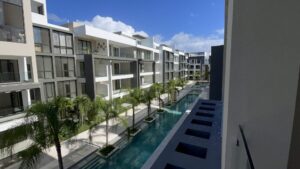
The Dominican Republic is home to approximately 11.3 million people. It is also a country that occupies half of the island of Hispaniola and thrives with a multicultural mix. Dominicans are primarily of European-African descent, but it is also easy to encounter white and Black residents here. Society is open, and daily life presents contrasts: from luxurious resorts to less affluent inland regions.
Check out Casa Dominicana’s offer: “Properties in the Tropics”.
How many people live in the Dominican Republic?
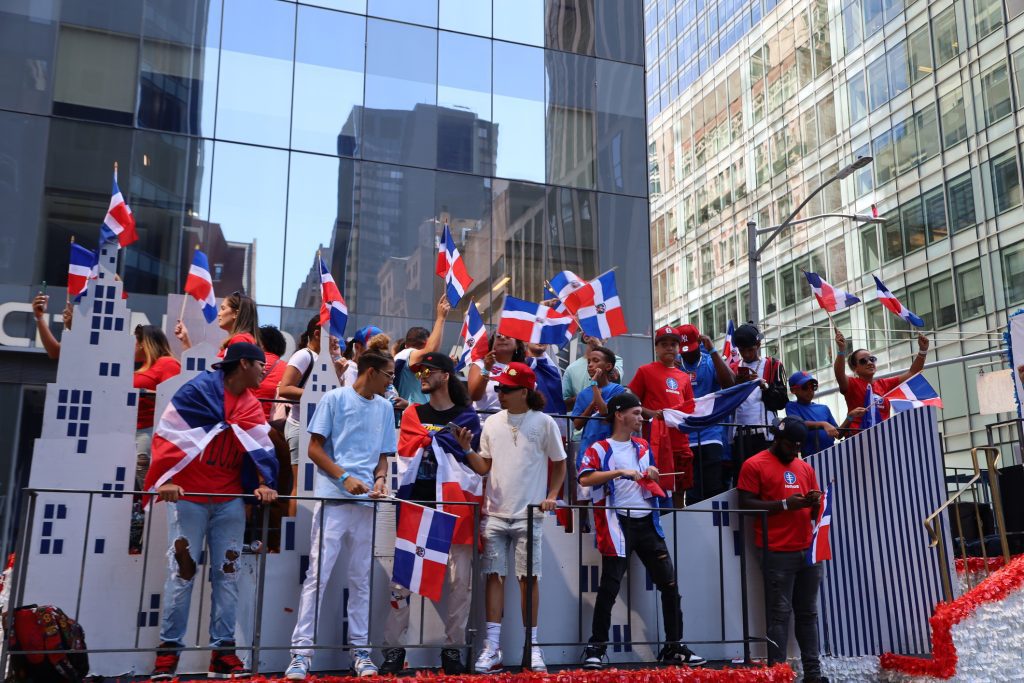
As of now (late April/early May 2025), approximately 11.3 million people live in the Dominican Republic. This is quite a lot, especially for a country occupying only half of the island of Hispaniola (the other half is shared with Haiti). It is worth noting that the population of the Dominican Republic is growing quite steadily – there are neither crazy demographic booms nor drastic declines. Of course, most people live in the capital – Santo Domingo – which itself is home to over 3 million residents.
Who inhabits the Dominican Republic?
It is difficult to answer this question unequivocally. Dominicans are indeed a true mix – whose history dates back to colonial times. Officially, it is stated that:
- approximately 70% of residents are of mixed origin – mainly European-African (i.e., descendants of colonizers and African slaves),
- approximately 16% are Black Dominicans,
- approximately 14% are white citizens.
These proportions, of course, vary depending on the region (e.g., in the capital, there are more white Europeans than in rural areas), but generally, a social “mix” is commonplace. In addition to native Dominicans, the country is also home to many immigrants – mainly from Haiti, Venezuela, Puerto Rico, and the United States.
Wealth or Poverty?
The Dominican Republic has many faces. On one hand, luxurious resorts; on the other, less affluent villages. If you look at the statistics, the country is developing very well – it is the fastest-growing economy in the Caribbean region. Although investors may feel like they are in paradise here, the average Dominican is not rolling in money. Nevertheless, it is worth emphasizing that the standard of living has noticeably improved in recent years. This is evident, among other things, in greater access to education, healthcare, and modern technologies. It is therefore a country where it is worth investing now.
Read: How is life in the Dominican Republic? Learn the opinions of Poles
Poles in the Dominican Republic
The Polish community in the Dominican Republic is quite small. It is estimated that there are about 300-400 permanent residents with Polish passports here. Most Poles come to the Dominican Republic for holidays rather than permanently – but there are also those who fell so deeply in love with the sun and the local climate that they decided to stay longer. They are mainly found in tourist towns like Punta Cana or Bávaro.
Frequently asked questions
1. What language is dominant in the Dominican Republic?
The official language of the Dominican Republic is Spanish – and in a very melodic, Caribbean variant. In tourist areas, you can easily communicate in English, but in the provinces, it can be difficult without basic Spanish.
2. Are there large national minorities in the Dominican Republic?
Yes, the Haitian minority is particularly visible. It is estimated that people of Haitian descent constitute as much as 5-10% of the Dominican population, mainly in border regions and the construction sector.
3. What is the average life expectancy in the Dominican Republic?
The average life expectancy in the Dominican Republic is approximately 74–75 years, which is quite a good result for Caribbean standards.