Canadians can buy a second home, a future retirement property, or a rental in the Dominican Republic without obtaining Dominican residency. Before you sign, budget for the purchase in Canadian dollars, have a local lawyer review the deal, and check what you’ll need to report in Canada. You can handle much of the process from home.
Retirees, families, entrepreneurs, investors, and remote workers all have different reasons to look beyond a winter holiday. In 2025, the Dominican Republic recorded more than 11.67 million visitors by air and sea, including more than 1.1 million air arrivals from Canada. Statistics Canada separately estimated 984,000 visits to the Dominican Republic by Canadian residents that year. The two sources count travel differently, so their totals aren’t directly comparable.
Can Canadians buy property in the Dominican Republic?
Yes. Canadian citizens can buy apartments, houses, and land in their own names. Foreign buyers generally have the same property ownership rights as Dominican citizens.
Do Canadians need residency to purchase property?
You can purchase property while living in Canada. For a standard transfer, start with a valid passport and a second official ID. Your lawyer, bank, or seller may ask for additional paperwork as the transaction progresses. If you plan to relocate or stay for an extended period, check the immigration rules separately. The purchase gives you ownership of the property. Permission to live in the country comes through the applicable immigration process.
How does the property buying process work for Canadians?
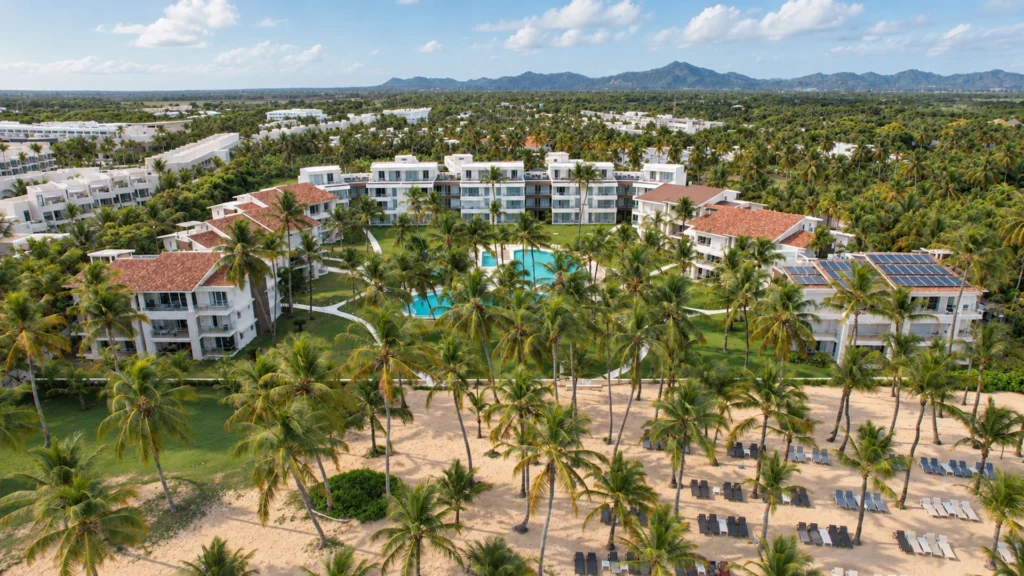
1. Choose a location that fits how you’ll use the property. If you’re a Canadian buying property in Dominican Republic resort areas, decide whether you’ll use it for winter stays, live there year-round, or rent it out. Punta Cana and Bávaro offer apartments and houses near beaches or in gated communities, with options for holiday rentals and longer stays. Cap Cana has higher-end homes and resort facilities. On the north coast, Cabarete and Sosúa have international communities and easy access to water sports. Las Terrenas offers beaches, restaurants, and a smaller-town setting. Compare prices, maintenance costs, and community rules. For a rental, check demand and competition in both busy and quiet months.
2. Have an independent Dominican lawyer review the property. For a completed home or resale, confirm that the seller has the right to sell, the title matches the property, and there are no registered liens or claims that would affect the deal. For a developer sale, have your lawyer review the project’s documents and the terms that apply if construction or handover is delayed.
3. Agree on the reservation and contract terms. Some sellers and developers ask for a signed reservation form and a deposit. Before paying, confirm when the deposit is refundable. A developer sale often proceeds to a preliminary agreement called a Promesa de Venta. Have your lawyer check the price, payment deadlines, handover conditions, and what happens if either party fails to meet its obligations.
4. Arrange the transfer from Canada. Dominican listings often quote prices in US dollars. Ask your bank how it will convert CAD to USD and what your sending bank, any intermediary, and the receiving bank may charge. A USD wire may pass through a US correspondent bank, so check how much will reach the designated account. For a large transfer, your bank may request the purchase agreement, bank statements, or other evidence of the payment’s purpose and the source of funds.
5. Close the sale and register ownership. Once the contractual conditions are met, your lawyer can help finalize the sale and file the transfer with the Registro de Títulos. Keep the signed agreement, transfer confirmations, and ownership documents with your records.
What taxes and costs should Canadian buyers consider?
Your budget depends on the property, how you use it, and where you’re a tax resident. Consider the Dominican costs and Canadian reporting obligations separately.
Dominican transfer tax. The standard one-time rate is 3% of the higher of the tax authority’s property valuation and the price stated in the sale deed. Budget for it at closing unless your purchase qualifies for an exemption.
Annual property tax (IPI). In 2026, individuals pay 1% on the portion of their combined taxable Dominican real estate holdings above RD$10,695,494. The threshold applies across your holdings, so owning more than one property can change the amount you owe.
Dominican rental income tax. Rental income can be taxable in the Dominican Republic. The treatment depends on your tax status, the type of income, and the structure you use to operate the rental. Progressive rates can apply to individuals, while the standard rate for Dominican-domiciled companies is 27%. Ask a local tax adviser which rules apply to your rental.
CONFOTUR incentives. Qualifying tourism projects can receive exemptions from transfer tax, IPI, and certain income taxes. The project’s incentive period can run for 15 years from completion of construction and equipping, subject to the program’s conditions. Ask for the official approval and confirm which exemptions apply to your purchase or rental activity and how long they run.
Dominican capital gains tax. Under Law No. 30-26, the 2026 rules generally impose a one-time 10% tax on an individual’s taxable capital gain from selling real estate. Exemptions and calculation rules can affect the amount due. Company sales follow different rules.
Canadian income reporting. Canadian tax residents generally report worldwide income, including Dominican rent converted to Canadian dollars. That reporting obligation can still apply if the income is exempt in the Dominican Republic. Canada and the Dominican Republic have a tax treaty, and eligible Dominican tax paid on income you report in Canada may qualify for a foreign tax credit. A cross-border tax adviser can help you determine what applies in both countries.
Form T1135. Canadian tax residents generally file this form if the total cost amount of their specified foreign property exceeds CAD 100,000 at any point in the tax year. A vacation home used mainly for personal purposes is generally excluded. A property held to earn rental income can count toward the threshold.
Other costs. Allow for legal and administrative fees, furnishing, and preparing the home for personal use or rental. In a gated community, ask about monthly maintenance fees, known locally as mantenimiento. If you’ll rent the property, include cleaning, repairs, reservation handling, and guest services in your budget.
Can you buy and manage a Dominican property from Canada?
Yes. You can review listings, tour properties by video, and coordinate documents from Canada. The steps you can complete remotely depend on the type of sale and the procedures of the banks and other parties involved.
A local property manager can handle reservations, guest messages, cleaning, and repairs while you’re away. Before you hire one, ask what the commission covers, how they report income and expenses, and when they send payouts. If you plan to host tourists, confirm that the community permits short-term rentals.
How can Casa Dominicana help Canadian property buyers?
Our team speaks English and Spanish. We help you compare properties and communicate with developers, lawyers, banks, and service providers. That’s useful when paperwork or appointments are handled in Spanish and English-language assistance varies by institution.
We also coordinate remote purchases with local lawyers and specialists, assist with opening a bank account, and help you prepare the property for personal use or rental. If you need ongoing management, we can help you explore local options. Browse our apartments and villas or contact Casa Dominicana if you’d like help finding other properties.
FAQ
Can I sign a power of attorney in Canada for a Dominican property purchase?
You can usually sign in Canada if the transaction allows a representative. Ask your Dominican lawyer to prepare or approve the wording before you sign. Depending on where the document is notarized, a provincial authority or Global Affairs Canada can issue the apostille. Confirm whether you also need an official Spanish translation.
Which exchange rate should I use to report Dominican rental income in Canada?
The CRA generally uses the Bank of Canada rate in effect on the date the amount arose. An average annual rate can apply in some cases involving recurring payments. Keep a record of the amounts in the original currency, the dates, and the rates you used.
How do I calculate a Canadian capital gain if I sell the property in US dollars?
Calculate the gain in Canadian dollars. Convert the adjusted cost base using the applicable exchange rate at acquisition, and convert the proceeds and selling expenses using the rates that apply to those amounts. Exchange-rate changes can affect your Canadian gain even if the purchase and sale prices are close in US dollars.