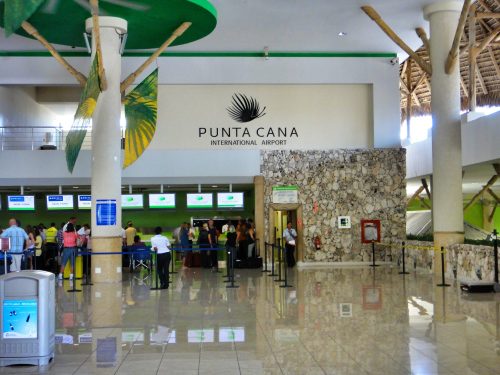
Caribbean souvenirs tempt you at every turn – but before you toss seashells from the beach or a bag of cigars into your suitcase, you need to know one thing: not everything you find at a market stall can be legally taken to Poland. The Dominican Republic has specific customs regulations: while many items can be exported without issue as a tourist, others are completely prohibited. And then there are those that airport staff will let through… or not, depending on their mood.
10 Things You CAN Take Out of the Dominican Republic
Shopping in the Caribbean is not only a mandatory part of every trip, but also… a minor logistical puzzle. Because while a coconut magnet or a bottle of rum won’t surprise anyone at the airport, not everything can simply be packed into your suitcase and taken with you. The Dominican Republic – like any country – has its own customs regulations governing what can and cannot be exported. In the case of souvenirs or personal purchases, it is important not to exceed the permitted quantity and value limits set by the Dominican Customs Authority (Dirección General de Aduanas) and the entry standards of the destination country (such as the EU or USA). This applies particularly to alcohol, tobacco, electronics, and perfumes. Interestingly – many items that would require customs duties or declaration in our country can be exported from the Dominican Republic quite freely… as long as you don’t look like a trader 😉. You can legally take with you:
- Handicrafts and souvenirs – magnets, masks, paintings (newer).
- Cigars and tobacco – up to 50 cigars or 200 cigarettes (per person).
- Alcohol – up to 1 liter of spirits (e.g., rum).
- Dominican coffee – packaged, for personal use (up to 10 kg).
- Chocolate and spices – local food products.
- Clothing and accessories – legally purchased or personal.
- Jewelry with larimar and amber – with a certificate of authenticity.
- Natural cosmetics – e.g., avocado oil, aloe products.
- Brand-name perfumes and cosmetics – up to the customs limit.
- Electronic equipment – legally purchased or private.
The limits that apply when leaving the Dominican Republic (and in fact – any other country) result from international customs regulations and the logic of “permitted personal use.” The point is to distinguish an ordinary tourist returning from vacation from a person attempting to illegally smuggle goods for resale. No one will make a fuss about two bottles of rum or a pack of cigars, but a suitcase full of cigarettes and 10 watches is a different story.
- Cigars and alcohol have limits – e.g., 50 cigars and 1 liter of spirits is the “tourist standard” recognized by most countries.
- Perfumes, electronics, jewelry – are subject to value limits (most commonly 430 euros for an adult passenger in the EU), as these are high-priced goods.
- Food and cosmetic products – are permitted, provided they are packaged and do not pose a biological risk (e.g., you are not transporting meat or fruit).
- Handicrafts and souvenirs – are legal, but only new ones, less than 100 years old. Older items may be treated as cultural property, which is subject to completely different regulations.
In short – you can take souvenirs, flavors, and aromas from the Dominican Republic with you, but everything in reasonable quantities, for personal use. And if something raises doubts – it is better to ask beforehand than to explain yourself at the airport.
10 Things You CANNOT Take Out of the Dominican Republic
No one wants to make your life difficult – it is mainly about protecting the cultural heritage, natural environment, and border security of the Dominican Republic. If you do not comply with the rules: in some cases you may receive a fine, and your luggage will be confiscated. Essentially – most prohibitions concern the protection of nature and cultural property, i.e., things that are either endangered or have historical value. In addition, there are classic prohibitions known from most countries around the world, such as drugs or weapons. So what should you not pack in your suitcase if you do not want to have an adventure with the Dominican customs service or later with the customs office in Europe?
- Shells, corals, beach sand – are protected by environmental regulations. Yes, even “just one shell” can be a problem.
- Uncertified larimar and amber – only jewelry with a certificate, raw stones cannot be exported.
- Antique items – everything over 100 years old is protected as cultural property.
- Works of art by local artists (older) – without a document of origin they may be detained.
- Endangered species of plants and animals – e.g., exotic wood, birds, animals, or their parts (shells, skins, etc.).
- Psychotropic drugs and narcotics – even with a prescription they can be problematic without an official translation or authorization.
- Weapons and ammunition – also toys, replicas, and items resembling weapons.
- Large amounts of cash – above the equivalent of $10,000 must be declared, otherwise confiscation is threatened.
- Illegal copies (pirated goods) – e.g., counterfeit watches, handbags, electronics, or DVDs.
- Frozen meat and dairy products – for sanitary and phytosanitary reasons they are subject to export bans to many countries.
In short: not everything you find at the market can be packed. Do not be fooled by vendors who assure you that “it is legal.” If something seems suspicious – it probably is. And a souvenir for a few dollars is not worth ending up with a forced stop at the airport or a customs penalty in the destination country.
Controversial Regulations – What Is “Unclear”?
In addition to clear prohibitions and permitted goods, there is a third category: namely, items “on the borderline,” which can supposedly be exported, but only sometimes, with restrictions, or depending on the mood of security at the airport. Dominican customs regulations sometimes lack clear provisions regarding the export of items such as the following.
- Work tools – e.g., photographic equipment, drones (you may be interested in: How to Legally Fly a Drone in the Dominican Republic?), work laptops. Often they can be taken without issue, but if you are transporting more than one unit, you may be asked whether it is equipment for sale. It is advisable to have invoices.
- Contemporary works of art – purchased legally, but… if you do not have proof of purchase or the artist is not known, the office may consider it cultural property. It is better to have proof of origin.
- Plants, seeds, dried herbs – theoretically prohibited for phytosanitary reasons, but not always enforced. Nevertheless, it is better not to risk importing them into the EU without the appropriate certificates.
- Products made of larimar / amber purchased “on the beach” – may be treated as illegal if you do not have a certificate of authenticity. Be especially careful when purchasing from street vendors.
- Homemade food and beverages – e.g., homemade rum, cakes, preserves. For you it is a gift, for the customs officer – a product without a certificate. It is better to opt for factory-packaged items.
- Raw food products – e.g., fresh fruit, vegetables, or cheeses – are sometimes smuggled in luggage as a “snack,” but this is the risk of a large fine in the destination country (e.g., the USA has very restrictive regulations in this regard).
- Clothing from bazaars with logos of well-known brands – if they look like counterfeits, they may be detained.
As is often the case in the Dominican Republic – the law in many matters is not precise and much depends on the interpretation of security at the airport. If something raises your doubts: ask, request a receipt, certificate, do not buy “on someone’s word.” And if you want to be 100% (well, maybe 99%) sure – before returning, take a look at the Dominican Customs Authority website (www.aduanas.gob.do).