A location close to the beach in the Dominican Republic can make a property more attractive to tourists, easier to rent and potentially easier to resell later. However, paying a premium for proximity to the beach is not always the best decision. Price, the standard of the development, access to shops and restaurants, the actual route to the beach and the purpose of the purchase all matter. An investor focused on short-term rentals will have different priorities than someone looking for an apartment for personal use.
Proximity to the beach is about more than the view
When buying real estate in the Dominican Republic, one of the first questions is usually: how far is it from the beach? And for good reason. For someone buying an apartment for personal use, being able to walk to the sea can be a major advantage.
For investment properties, proximity to the beach can also affect tenant demand, how easy the property is to market and its future resale potential.
However, this does not mean that every property located 200 meters from the sea will automatically be a better investment than an apartment several kilometers away. Many other factors influence both the price and the overall potential of a property.
What does “close to the beach” actually mean?
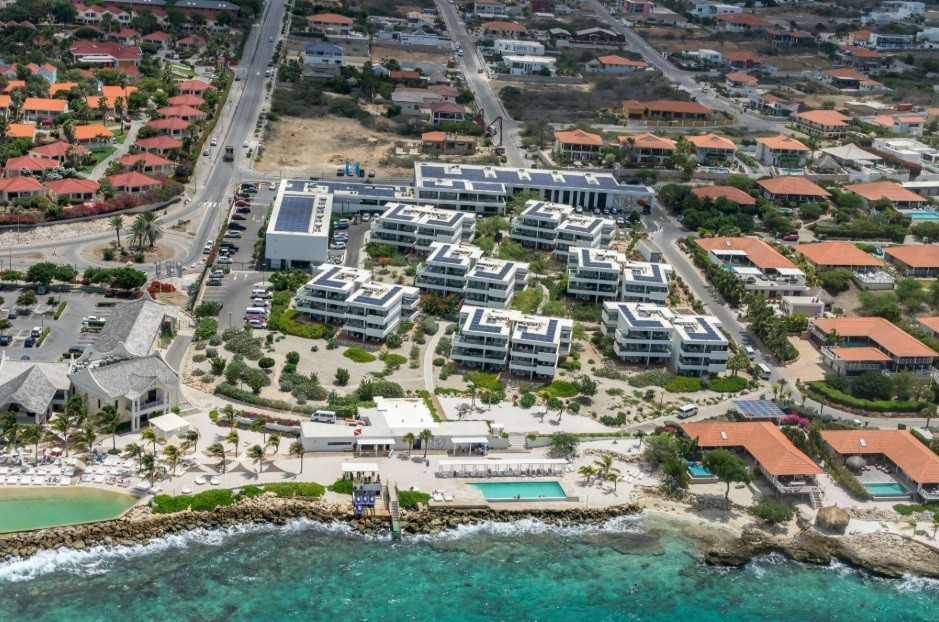
In real estate listings, the phrase “close to the beach” can mean very different things. Sometimes it really means a few minutes on foot, while in other cases it can mean a 10-minute drive. That is why, when analyzing a property, it is worth checking not only the distance in kilometers but also how you actually get to the beach.
Can you walk there? Is there a convenient road or path? Is the beach public? Are there restaurants and shops nearby? Will you need a car for everyday life?
Two apartments located at a similar distance from the sea can therefore offer completely different conditions. The number of kilometers alone does not tell the full story.
Proximity to the beach and short-term rentals
For Airbnb and other short-term rental platforms, location often plays a major role. A tourist coming to Punta Cana or Bayahibe for a week will usually want to spend time at the beach, in restaurants and on excursions. The message “5 minutes’ walk from the beach” may be more convincing than a long list of amenities within the development.
A property close to the sea is also easier to market. A beach photo combined with information about a short walk creates a simple and clear message that almost every potential guest understands.
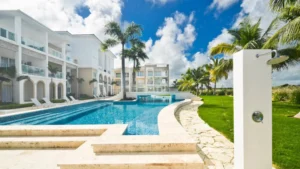
That does not mean that a property located farther from the beach cannot perform well on the rental market. Punta Cana has many large residential communities offering swimming pools, lagoons, restaurants, sports areas or shuttle transport to the beach. In that case, guests are paying for the entire lifestyle offered by the development, not only for being close to the sea.
First-line beachfront properties cost more
Properties located directly on the beach are usually among the most expensive. Their price is not only about the view. Land in such locations is limited, which means you cannot simply build an identical project a few kilometers inland and offer the same product.
The more unique the location, the harder it is to replace. From an investment point of view, this can also matter when the time comes to sell the property.
An apartment can be renovated, a kitchen can be replaced and a swimming pool can be upgraded. The location cannot be changed.
Is it always worth paying more?
Not always. If the price difference between two similar apartments is tens of thousands of dollars, it is worth checking whether the additional cost will actually translate into proportionally higher rental income or stronger resale potential.
For someone planning to spend several months a year in the Dominican Republic, a larger property, a quieter area, a nearby supermarket or convenient access to the airport may matter more.
An investor focused mainly on short-term tourist rentals, on the other hand, may prefer a smaller apartment located just a few minutes’ walk from the beach. The final decision should therefore depend primarily on the purpose of the purchase.
The location should match the purchase strategy
There is no single best location for every buyer. A property intended for vacation rentals should be evaluated differently from an apartment used for several months a year, and differently again from a house where the owner plans to live permanently.
Before buying, it is worth answering a few questions:
- Is the property mainly expected to generate income?
- Will we use it regularly ourselves?
- Do we plan to rent it to tourists?
- Are we planning to have a car?
- How important is access to restaurants, shops and services?
Only after answering these questions can you properly assess whether paying more for a beachfront or near-beach location actually makes sense.
In the Dominican Republic, sometimes it is worth paying more for a property located 200 meters from the sea. In another situation, a larger apartment in a well-designed residential community several kilometers from the beach may be a better choice.
The most important thing is not the distance from the sea itself, but whether the location matches the purpose of the purchase.